
Chagan Lake flourishes through water diversion project
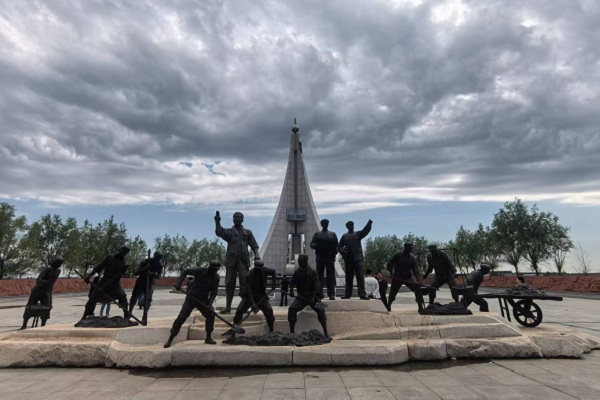
The monument commemorating the Yinsong project. [Photo provided to gojilin.gov.cn]
On the shores of Chagan Lake in Jilin province, wetlands, rice fields, wind turbines and oil wells together reflect a landscape where ecological conservation and economic development coexist. In 2026, the Yinsong project, a major water diversion undertaking that reshaped the region's future, marks the 50th anniversary of its launch.
Construction of the project began in September 1976 to address severe ecological degradation around Chagan Lake. Reduced inflows had caused the lake to shrink dramatically, while surrounding grasslands deteriorated and farmland suffered frequent droughts. To reverse the trend, local authorities mobilized more than 80,000 residents to build a 53.85-kilometer canal linking the Songhua River with Chagan Lake.
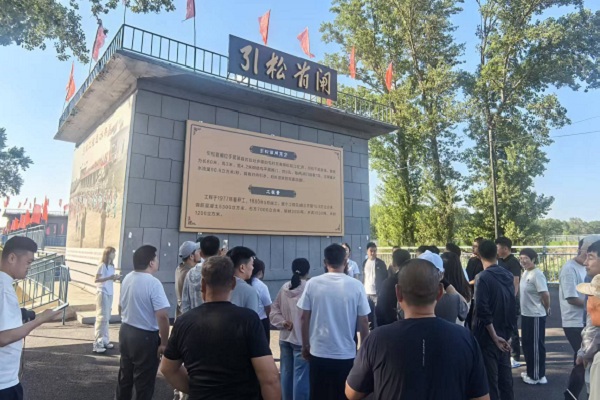
People gather at one of the key facilities of the project. [Photo provided to gojilin.gov.cn]
Completed in 1984 after eight years of construction, the canal relies on natural elevation differences to deliver water without pumping facilities. The project restored water supplies to the lake, expanded wetland ecosystems and improved agricultural conditions across the region.
Over the past five decades, continued investment in canal maintenance, irrigation infrastructure and ecological restoration has enhanced water management and supported sustainable development. The improved environment has boosted rice production, reduced soil salinization and strengthened local biodiversity.
The ecological recovery has also supported tourism growth. Chagan Lake, known for its traditional winter fishing culture, was recognized as a national 5A tourist attraction in 2024. Since 2021, it has welcomed millions of visitors and generated significant tourism revenue.