
Gold seal bridges civilizations on Intl Museum Day
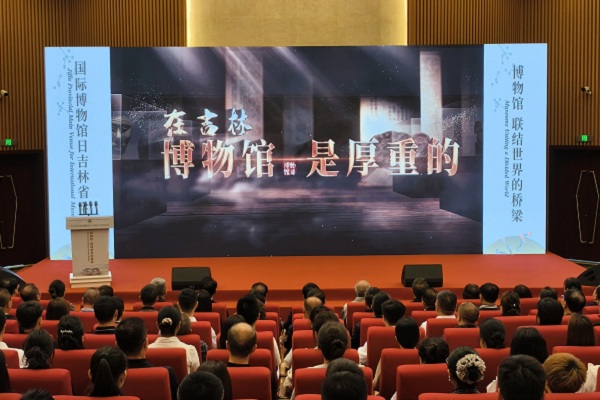
The main venue of the International Museum Day celebrations in Jilin. [Photo provided to gojilin.gov.cn]
During the International Museum Day celebrations held on May 18 in Northeast China's Jilin province, the gold seal of the Jin Gaogouli Guiyi Marquis from the Western Jin Dynasty (265-316) found its new home, as it was added to Ji'an Museum's collection.
Cast during the Western Jin Dynasty more than 1,700 years ago, the seal consists of a horse-shaped knob that stands above seven engraved Chinese seal-script characters.
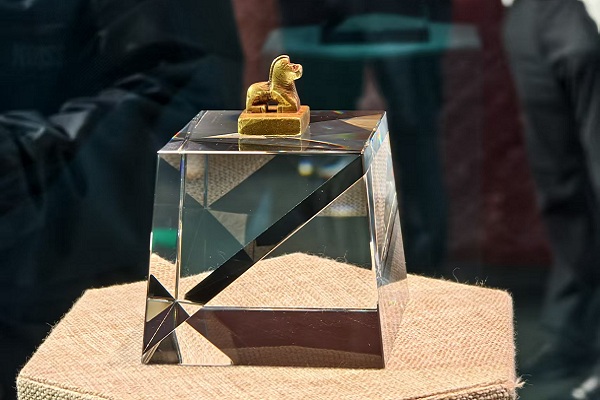
The gold seal. [Photo provided to gojilin.gov.cn]
In 2025, it drew global attention at China Guardian Auctions, where it set a new world record for ancient seals. It has now been donated to Ji'an Museum.
For scholars, the seal is far more than a rare treasure. Researchers say it provides the first physical evidence confirming that the Western Jin court formally conferred noble titles upon Gaogouli elites.
Earlier discoveries included lower-ranking bronze seals associated with the Gaogouli administration, but no gold seal linked to high-ranking nobility had ever been found. Its form, casting techniques, and horse-shaped knob closely resemble those of other Western Jin seals granted to frontier ethnic leaders, reinforcing historical records of governance and interaction between the dynasties of the central plains and northeastern frontier peoples.
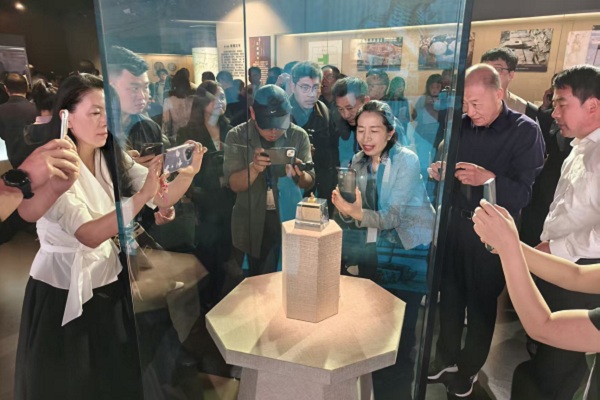
Journalists surround the gold seal. [Photo provided to gojilin.gov.cn]
Experts believe the artifact reflects the formation of the Chinese nation as a diverse yet unified civilization. Its return also highlights a broader global consensus on cultural heritage protection: relics carry their deepest meaning when preserved within their historical and cultural context.
Today, inside the gallery of Ji'an Museum, the ancient gold seal has become more than an artifact. It is a bridge across time, geography, and civilizations – linking past and present, China and the world.
China's cultural heritage site – capital cities and tombs of the ancient Gaogouli Kingdom – was inscribed on the UNESCO World Heritage List at the 28th session of the UNESCO World Heritage Committee, held in Suzhou from June 28 to July 7, 2004.