
Jilin advances integrated development of education, technology and talent
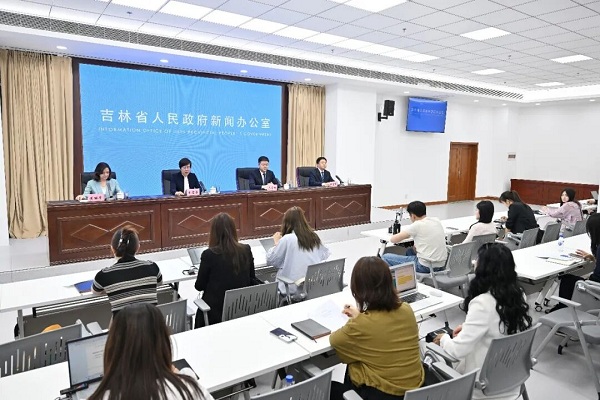
A news conference is held on May 14 to announce Jilin's plans for integrating education, technology, and talent. [Photo/Jilin Release]
Northeast China's Jilin province outlined plans to advance the integrated development of education, technology, and talent during a news conference on the province's 15th Five-Year Plan (2026-30) initiatives, aiming to strengthen innovation-driven growth and support the development of a modern industrial system with distinctive local characteristics.
Officials said the province has prioritized coordinated reforms in education, science, and talent development in recent years. Since 2020, Jilin's national ranking in overall innovation capacity has risen by seven places, while its total talent pool has exceeded 2.5 million.
During the 15th Five-Year Plan period, Jilin will promote the coordinated construction of a strong education system, an innovation ecosystem, and a talent base. Authorities are drafting a dedicated development plan to improve policy coordination, resource sharing, and joint project implementation across the three sectors.

A journalist raises a question at the conference. [Photo/Jilin Release]
The province will continue strengthening higher education by supporting the development of leading universities and expanding disciplines linked to strategic industries such as optoelectronics, new energy, new materials, artificial intelligence and low-altitude economy. By 2030, more than 80 percent of newly added academic programs are expected to align with national or provincial priority sectors.
Jilin also plans to intensify key technology research in areas including hydrogen energy, embodied intelligence, aerospace information, solid-state batteries and advanced materials. Around 30 major research projects are expected to be implemented to support original innovation and industrial application.
To improve talent support, the province will expand programs for strategic scientists, engineers and young researchers, while encouraging closer cooperation between universities, research institutes and enterprises through initiatives such as industry professors and science and technology commissioners.
Officials said efforts will also focus on improving innovation platforms, accelerating technology commercialization, deepening industry-education integration and creating a more flexible and efficient talent evaluation and mobility system to better support high-quality development.