
SPIC Green Energy Co to boost Jilin's green energy industry
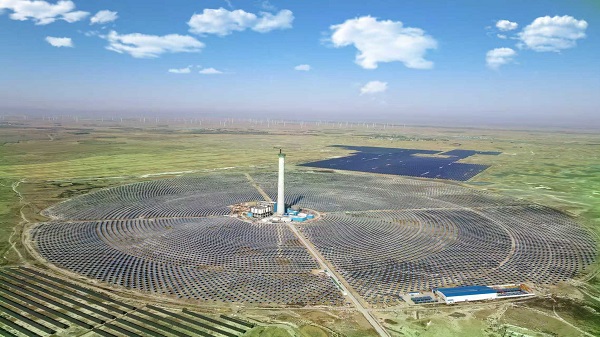
SPIC Green Energy Co is responsible for 96 million square meters of heating across Jilin province. [Photo provided to gojilin.gov.cn]
State Power Investment Corporation (SPIC) Green Energy Co will coordinate its SPIC enterprises in Northeast China's Jilin province during the 15th Five-Year Plan (2026–30) with a total projected investment of nearly 100 billion yuan ($14.49 billion).
By 2030, the company aims to complete its 10-million-kilowatt integrated clean energy base and a million-metric-ton green hydrogen-based energy base in western Jilin.
For over 20 years, as a listed enterprise under SPIC and a global platform for the green hydrogen energy industry, SPIC Green Energy Co has established a collaborative development model in Jilin across wind, solar, thermal, hydrogen, and storage. It is Jilin's leading power-generation enterprise and a benchmark for green transformation.
As of September 2025, the company had a total managed asset of over 100 billion yuan and a total managed capacity of 17.8 million kW, around 80 percent of which is clean energy.
As a central government-owned energy enterprise, SPIC Green Energy Co will align its capabilities with Jilin's needs to develop strategic demonstration projects in "new energy+" and green hydrogen-based energy. The goal is to promote large-scale development and efficient consumption of new energy while building a modern industrial system with Jilin's advantages.
The enterprises will accelerate the development of a 10-million-kW clean energy base in Jilin through the integration of wind, solar, thermal, and storage, and explore clean heating alternatives and non-electrical applications to increase the utilization rate of green power.
By replicating its proven model in coastal and key inland regions, the enterprise will drive the large-scale development of new energy and industrial clusters, creating multiple million-kilowatt bases and forming a coordinated development pattern for "new energy+".