
A historical gathering
From million-year-old skulls to ancient ports, the country's archaeologists unearthed important discoveries last year, Wang Kaihao, Wang Ru and Lin Qi report.
Editor's note: China's top 10 list of archaeological discoveries of 2022 was released by the National Cultural Heritage Administration on March 28. Selected by 21 top-tier scholars across the country, the list showcases outstanding representatives of nearly 1,700 archaeological projects nationwide. China Daily reporters explain their significance in decoding the past and inspiring the present.
[Photo provided to China Daily]
The temple ruins of Guchengcun, Hunchun, Jilin province, from the 5th century
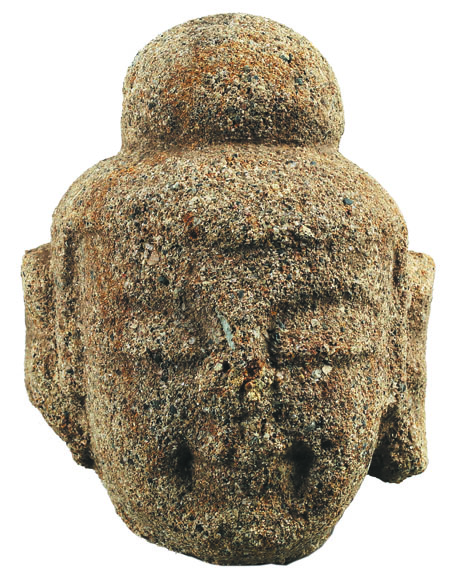
New findings largely contributed to studies of Buddhist cultures in two states, Gaogouli (Goguryeo) and Bohai (Balhae), which were influenced by counterparts on the Central China Plains.
The No 1 temple, dating back to the 5th century, is the first Gaogouli (37 BC-AD 668) Buddhist temple ever found in China, and one of the earliest Buddhist temple sites in Northeast China.
The No 2 temple was of high social status in the Bohai state (698-926). It helps in the study of the layout and architectural structure of temples in the Tang Dynasty (618-907), and Sarira (bead-shaped objects that were found among the cremated ashes of Buddhist spiritual masters) burial system in ancient China.
Buddhism began to be spread in China during the Han Dynasty (206 BC-AD 220) and reached a climax from the Three Kingdoms period (220-280) to the Southern and Northern Dynasties (420-581). But understanding and explaining the spread of Buddhism in Northeast China during those times was difficult until the finding of the Buddhist statues on this newly unearthed site.